
Historical Reminiscences of Cosmonaut Georgi Mikhailovich Grechko
Historical Reminiscences of Cosmonaut Georgi Mikhailovich Grechko
By Dennis Newkirk and Jim Plaxco
This article originally appeared in the May 1993 issue of Spacewatch.
What follows is part one of an interview with cosmonaut Dr. Georgi Mikhailovich Grechko made on April 7, 1993 by Dennis Newkirk(DN);, author of the Almanac of Soviet Manned Space Flight, and Jim Plaxco(JP);. Dr. Grechko was gracious enough to skip lunch to answer our questions in between his CSSS sponsored appearances here in the Chicago area.
While here, approximately 1,600 people heard Dr. Grechko speak about his experiences in the Soviet space program. The audiences ranged in size from the 12 students and teachers of the Harper College Honors Astronomy class to a packed 550 seat auditorium at Schaumburg High School.
Dr. Grechko's english is self described as broken English (the international language of scientists); and this flavor has been retained somewhat in this transcription. In addition, some of the more interesting questions and answers from his recent lectures have been appended to this interview.
Dr. Grechko graduated form the Leningrad Institute of Mechanics in 1955. In April 1964, he was among 13 men selected from the Korolev Design Bureau for cosmonaut group. Dr. Grechkp received a Master of Technical Science in 1967. Based on his work in Korolev Design Bureau on lunar probes, he was assigned to train for the Zond circumlunar mission. After cancellation of the circumlunar mission in 1968, all Zond trainees were transferred to the lunar landing mission. After cancellation of the lunar landing missions, all cosmonauts were transferred to either the ASTP, Salyut, or Almaz programs. Grechko was on backup crews for Soyuz 9, 12, and T-11. He flew on the Soyuz 17/Salyut 4, Soyuz 26/Salyut 6, and Soyuz T-14/Salyut 7 missions for a total of 133 days in space. Grechko then became the head of a laboratory at the Soviet Academy of Sciences specializing in high altitude atmospheric physics.
JP - What was your position for your first flight?
GRECHKO - Flight Engineer. I had scientific tests, I spend all my time, sometimes in the morning I knew I had a very interesting scientific program and decided not to eat all the day, and in the morning I would get a chocolate from the food stores so as to not spend time eating, but in the end of the day I would find the chocolate still in my pocket. Because there are too many new prospects in space, so much is interesting that I don't like eating or sleeping. I like experiments and my duty was engineering, exploring all devices of the station, but my hobby was science, and I was most successful with scientific experiments on board Salyut 6 and the scientific program of our mission to Salyut 7 was made by me and my friends. I was one of the authors of the program. And it means I was engineer, became Flight Engineer and became scientist on board a space station, and then I founded my laboratory to study atmosphere from space. I was the head of this laboratory processing data we obtained from space.
JP - Was the data you obtained on the atmosphere from space very valuable to your studies?
GRECHKO - I made many experiments about the Earth's surface, ocean surface, medical, biological, and I had many results, but the most successful were my studies of the atmosphere. Then after my first flight I understood and I thought about the efficiency of our space station and with Segdayev he understood that the efficiency of our station was very low and your NASA insists on the same low efficiency of your Freedom station and my thought was, what can I do to have designed to get more scientific results from a flight. First I tried to write that the idea of our station was wrong, the more modules our chiefs thought, and they still think now, the more scientific modules the better but it's wrong. The more scientific modules make the efficiency of the station lower experiments will interfere with each other, require different orientations, are sensitive to human movements, etc., diminishing the time each experiment can be active. When I express it for the first time to Glushko and his deputy, Semenov, they punished me, they stripped me into pieces, they ignored me for many years after this. I expressed this idea in 1978 for the first time, that a manned space station is a bad idea. They are getting awards for this kind of space station and even the first cosmonaut on board said that its a bad idea. But all new ideas have three steps, first 'its impossible', next step is 'maybe', and next is 'its obvious'. A free-flyer design is best for efficiency.
JP - How do you define space station efficiency?
GRECHKO - When I understood my new idea had no support, just like new idea of Feoktistov for single stage vertical takeoff and landing project he had no support also. I asked myself what else I could be and I understood that we had good enough cosmonauts to make experiments, I was maybe number 1, 2, or 3, or maybe 3rd best or 5th best in scientific experiments but number 1 for me was Dzhanibekov not only because he flew 5 times in space but because he was very efficient and modest, very active in space. He was number one for me, maybe I was number 3 or 5, I don't know, but I understood that we had good enough cosmonauts but our data sometimes was not processed. I understood that now the main task was not to have data from space but to process data from space and I understood that for me it was one way to make our space station more efficient from a scientific point of view and founded a new laboratory to process all data that I had from space, but not astrophysics, biological, medical, geophysics, I choose my atmosphere data.
JP - What would your advice be to NASA about the space station Freedom program.
GRECHKO - I told them 2 or 3 years ago my opinion about free flyers they rejected and didn't appreciate my idea because it was too new for them, because they are bureaucrats, because they had their money for Freedom and nobody would speak up. It was my duty to say to America that you have the wrong idea. Two or 3 years ago when they discussed a redesign to make Freedom a little smaller or bigger and I told them it is not a thing for discussion, to make it bigger or smaller, you should think about new ideas and one example of a new idea is a free flyer, but maybe you will have a new much better idea that my idea of a free flyer but stop this monkey business to repeat our mistake with many scientific modules on the same platform, but they were blind.
JP - One of the arguments for having people on space stations for a long period of time is that it helps us learn a lot about trips to Mars. How do you react to the assertion that Mir was a stepping stone to manned mission to Mars?
GRECHKO - Mir was really a step to Mars because before flight to Mars, we should fly for about one year about the Earth. Of course it is true.
DN - Perhaps it is best to make a station with scientific modules that can dock periodically for servicing by a crew?
GRECHKO - When they began to make plans for Mir station it was crazy that after docking they throw away the engine module and I told them its crazy, you should use this modules like free flyers with engines and shouldn't discard the engines after docking like Kvant 1. First of all you should use this module in fully automatic mode 24 hours a day for one or two months and only then you should dock the module and discard the engines. You know it is said that in your own country you can not be one who looks ahead for your own country. The US has the same problem.
JP - How are things now in the Russian space program?
GRECHKO - Space activity was the great advertisement of the USSR, but now the government is bankrupt. We have some money, but not enough. We will cancel the most expensive programs, we will use our unmanned satellites and Mir and we will lease the station to astronauts of other countries and we will use our boosters to launch foreign satellites and we will cooperate with other countries. You know you have a space shuttle, we have a shuttle and maybe soon a smaller shuttle, Germany has Sanger, France Hermes, Great Britain Hotol, it is crazy to have 6 shuttles. We should cooperate and use your shuttle, our boosters, and so on. The best from all countries. But of course you will have trouble from your space industry, they have a very good lobby in your congress, because when I was in the Headquarters of NASA in Washington a few years ago and I said your station was too big and the idea was too old. They didn't appreciate my speech. After all, they were big bosses and had their money, but now when I was in Ames more recently and I tell them the same thing they appreciate it.
Some audience questions from one of Dr. Grechko's public appearances here.
Q - Were you ever scared during your flights?
GRECHKO - In two different ways, one is during reentry when I could see out the port hole the heat shield burning away getting thinner and thinner. I knew that it would be okay, but the shield is about 20 cm from my head and it was scary to see even thought I know it will be all right. Another time the parachute did not come out when it should and I thought what to do .... I decided to study the instruments and at least tell mission control what was happening, and then it opened. But really, in a good way, I was at first scared I might not be able to perform my mission and would fail in some way, but after I see that I can do it, it was all right.
Q - How long did it take for you to recover from your 96 day flight?
GRECHKO - About 2 weeks to be able to function relatively normally, but it was about 3 months before the doctors judged me to be fully recovered. Not okay for flight but okay for normal activities.
Q - Have you proven that flight to Mars or a permanent space station is okay?
GRECHKO - A colony in space I don't know, but colony on moon or Mars is probably okay for good health. Of course I guess, because no one can answer your question now.
Q - Were there any women involved in the space program?
GRECHKO - Tereshkova was the first in space but this was a political decision to launch a woman. In that day, we should be number one in everything, the first satellite, first man in space, first woman in space and we joked at the time we should have the first child in space. It was the great years of space race between our countries. But then we heard the Americans plan to have the first space walk for American woman, immediately we launched our Savitskya and she made the first space walk for a woman. My point of view is that of course we should use women in space because there are some professions in which women are much better than men and in this case we should have women. If we need this profession in space and it is a profession in which women are better lets go with them if not then no. There was a joke in our space team when we invited a French cosmonaut to fly on board our space station, the first response was that they would launch a French woman with us in space and we had a meeting and joked and asked each other who will fly in space with a French woman, and I said that I would not and they joked about me that I am afraid of French woman, but I said no, I'm not afraid but I had two good flights with very good results but I told them to fly with a French woman and to make something more beyond the flight program we would be punished, and if not then we will be punished more. But its just a joke. Seriously I hear this year they will launch another woman in space. She is the wife of our chief of mission control Ryumin and we jokingly asked him why he wants to launch his wife into space! She may fly in December 1993 on 18 month mission
JP - What was the atmosphere like working in the Korolev bureau before Sputnik.
GRECHKO - I was happy working in the bureau because I knew when I graduated there was no satellite and I could not choose any bureau working on satellites, so I choose the one working on the biggest rockets. Because in some years I knew that a space booster would be built. When I entered the bureau, my first duty was the SS-6 ICBM, and thank God it was never used for what it was designed. First of all, I calculated trajectories from Tyuratam to Kamchatka and understand deviation from target points. It was my duty to calculate the trajectory from the Cosmodrome, but it was not Cosmodrome at that time, it was "polygon" - the place to test rockets not to go to space. For me this was my happiest time, when I was a young engineer and I worked at the "polygon" to test the R-7 and test it for booster for the first satellites.
My most happy years were not my years in space but when I was in Korolev KB and at the "polygon". Why? because Korolev extended the spirit of pioneers. He supported all new ideas immediately, he didn't play dirty political games with rockets and satellites. He was very honest and direct. He did not try to hide or deceive, he was always straight forward and open. It was after some years it was very hard to ask a Chief Designer for an audience, but to ask Korolev even as a young engineer, I could ask Korolev and he invited me some days to see him. His power was in his team. He could choose his team, sometimes crazy and unpleasant people, but he did this with only one goal to go ahead and ahead with the design satellites, spacecraft and rockets. The spirit of pioneers and clean atmosphere of design bureau without rumors and playing and hiding something behind his back. We could make many things out of metal without many, many papers. Now if you make little devices you must make a vast quantity of papers before you can go ahead. Sputnik 2 was made in a month. I bet nobody now can make a new satellite in one month. We had experienced design bureau, but I bet no one bureau will make a satellite in one month, but we did it, because after the launching of the first satellite, and I know about it from his own mouth that he was invited to Khruschev at the Kremlin. Khruschev said "please do something launch something new for the anniversary of the revolution," but it was after Oct. 4 and the anniversary was Nov. 7. Less than one month and we launched a new satellite with a dog. This was for me the most important, very active, not very much documentation or signatures, signatures, signatures, signatures to avoid punishment if something went wrong. Nobody said "there existed an opinion", we would say our own opinions and Korolev would decide which was right and approve. I was happy in this clear pioneering spirit of that time.
JP - After your time as an engineer you became a cosmonaut with the lunar training group. What was it like, that seems like it would be quite a different life to make that change.
GRECHKO - I liked science fiction, and I had experience to be in the occupation by German troops in the Ukraine for 2 years in Chernigov without my parents, and my toys were rifles, guns and grenades. It was the toys of boys in war time. And many of my friends were dead by these toys, or wounded. I had only one. Once I had an explosion of one cartridge in my arm. You can see this displays slight scar on inside of thumb into the palm. But I was lucky, I was alive. And my character was I liked to drive motorcycles, fly gliders, small one engine airplanes, parachuting, down hill skiing, scuba diving, snorkeling, I was made for space Grechko drove in a vintage auto race in the US a few years ago with a team driving a 1973 Astin Martin and placed 3rd. I liked to be on first frontier. When we began design of spacecraft for 3 cosmonauts, Korolev said that one of the 3 should be flight engineers, and from whom would he choose flight engineers, of course from us young engineers in space technology. He knew us, and he invited us to be flight engineers because only we had experience in space engineering. I gather 2-300 of us were invited by Korolev for medical tests, but in those times medical tests were very hard, sometimes cruel, and only 13 of us got okay from physicians for flight engineer.
JP - What were your responsibilities as the flight engineer?
GRECHKO - I was to explore all devices in the spacecraft and station. It was my primary task. Because when Gagarin flew, his spacecraft was fully automatic, really he was the subject to test not the object. Gagarin was chosen as a very healthy man and good looking man and good in communication, but not like specialist, not like engineer, or doctor or academician. The next move in space was for specialist, and Korolev said one should be the same as Gagarin but the next should be engineer and next should be a scientist.
JP - The Commander would be the one to control the spacecraft?
GRECHKO - Really, all that he can do, the Flight Engineer can do, but a pilot can't do everything a flight engineer can do. Its really two departments, Ministry of Defense and Ministry of General Machine Building and they share their duty and their cosmonauts and it was fighting between them as to whose cosmonauts should fly. The Ministry of Defense and their people would say "you guys you are engineers, you duty is to design spacecraft and we are pilots, we should fly, not you" but Korolev was of course right because space is for specialists and professionals.
DN - I want to ask you about the Academy of Sciences in the 1960's and how much power it had to approve projects like N1/L3, and about President Keldysh.
GRECHKO - He was the figure number one or two compared to Korolev. He was very powerful man. He did very much for us. He had his own Institute of Applied Mathematics and we were very close with his institute. I calculated trajectories in Korolev's bureau and in his institute they calculated too and we compared. His influence was very good. It was their idea to launch rockets to the moon not from the Earth but from orbit. I had many colleges and friends in this institute. I was one of the last to speak to Keldysh, he was very interested in this and I spoke with him and he made many notes. I told him that the idea of keeping all instruments on the same station platform was not good, but he died. He had previously undergone heart surgery by a famous American surgeon.
DN - Was it his personal authority that had influence on projects, and not Academy of Sciences authority?
GRECHKO - His institute checked our ideas, and made methods of how to calculate our trajectories. They made mathematical investigations and I used their methods to calculate trajectories. It was not like Einstein, working all by himself, it was his institute and his people, now many of them are famous, it is a very good institute.
DN - When Korolev was trying to get funding for N1 or moon projects, who did he have to convince in the government?
GRECHKO - In cooperation with the Minister of General Machine Building and Minister of Defense, they make proposals to Politburo and Khruschev. Sometimes to Prime Minister, but he was not very powerful, most powerful was Politburo and Central Committee of CPSU. They have Department for Defense and in the department they have small department for space.
DN - What about the Council of Chief Designers?
GRECHKO - The Politburo and Central Committee, they never made any decision, even for one ruble, they never make bad decision themselves. They ask designers, academicians, and all. When maybe a hundred who can be blamed if they are wrong sign the document, will Politburo and Central Committee approve something. It was their politics and they never voiced their opinions. It was very funny that a man from the Central Committee, say a chief of a department or the Minister of Defense (there were wise chiefs and small chiefs);, nobody ever heard one of them say, "I have my opinion on this question," they instead say "There exists an opinion" but who's opinion you never know. It was very good to be in the Central Committee because you could say do this and that and never be blamed because nobody knew who's solution it was. Soviet industry was much more dirty players in business deals than your business. With one hand behind the back they would deceive and mislead, not at all like western business.
DN - The Korolev bureau seems to have split into pieces?
GRECHKO - Not really, we founded branches and first they were branches, then they became their own bureaus.
DN - Like Koslov, Photon, and Kosberg perhaps?
GRECHKO - Kosberg was not our branch, because Kosberg was a designer of engines and we asked him to make for us engines for some of our stages. I gather Kosberg was not founded by us.
DN - Was it founded by Glushko?
GRECHKO - No, it was a rival to Glushko. There was the big quarrel between Glushko and Korolev about the fuel for N-1, we would use Kerosene, Glushko wanted hypergolics, and because they didn't have any agreement, Glushko rejected to make engines for Korolev, and then Korolev asked Kosberg and Kuznetsov. But they were newcomers to big engines and it was very bad because engines from Glushko would have been much better in my opinion.
DN - What ended the N1/L3 project?
GRECHKO - The lunar program was ended because the lander was technologically inferior to the Apollo and the risk and expected or probable loss of life was too high to continue the project in the light of the highly successful Apollo landings. The N-1 was capable of being made reliable but without a reliable lander there could be no mission. This is why it was canceled.
DN - Did you ever work for Babakin KB?
GRECHKO - No, when we made Luna 9 and 16, and maybe another, I invented very new software to calculate the velocity of impact and reduce the velocity for landing. Then lunar landing program was transferred to Lavichkin and I gave them my software and they used it first when they made vertical landings, but then they made non-vertical landings they improved my software and their gratitude was very strange because when I had my masters degree I asked them to comment on my software and he mailed me their opinion that their software was much better than mine, but they used mine, improved it for some years. Of course their software was at this time better but they used mine and modernized it and I gave it to them without copyright or money and I spent many times adjusting my software to their computer.
DN - How does the Salyut KB and the Energia NPO Space Station Design Office work together?
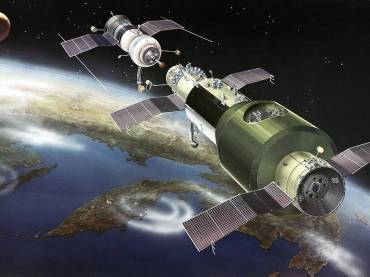
GRECHKO - The shell of the Almaz was used, and the control devices from Soyuz, were joined to make the Salyut. The Salyut hull was made by a branch of Chelomie KB, and the life support and control devices from the Soyuz were made by the Kaliningrad KB . I really don't know what is Salyut KB, maybe Salyut KB was this branch of Chelomei. I remember when we were at the Chelomei division it was divided into pieces and we had to change our passes when we went from one to another. Maybe one part of Chelomie was for rockets and another was for spacecraft, but maybe not.
DN - Do you know about the Spiral project which began in 1962 and flew in 1976?
GRECHKO - It was very good project, but it was one more mistake of our government. They said Americans didn't have a space shuttle and we shouldn't have too and it was destroyed. And then after you made your space shuttle, immediately they demanded a space shuttle. It was very crazy of our government.
DN - Can you tell me about Feoktistov's VTOL shuttle design?
GRECHKO - About 15 years ago, Feoktistov proposed a vertical take off and landing shuttle, but when he brought up the matter with Semenov his idea was not received well and he left Energia NPO after that. Feoktistov was brilliant but very temperamental when he knew he was right.
DN - You have written that sometimes at the Cosmodrome, Korolev would pick up his engineers at the safety fence around the launch pad and take them beyond the gates, in his car, to watch the launch with him?
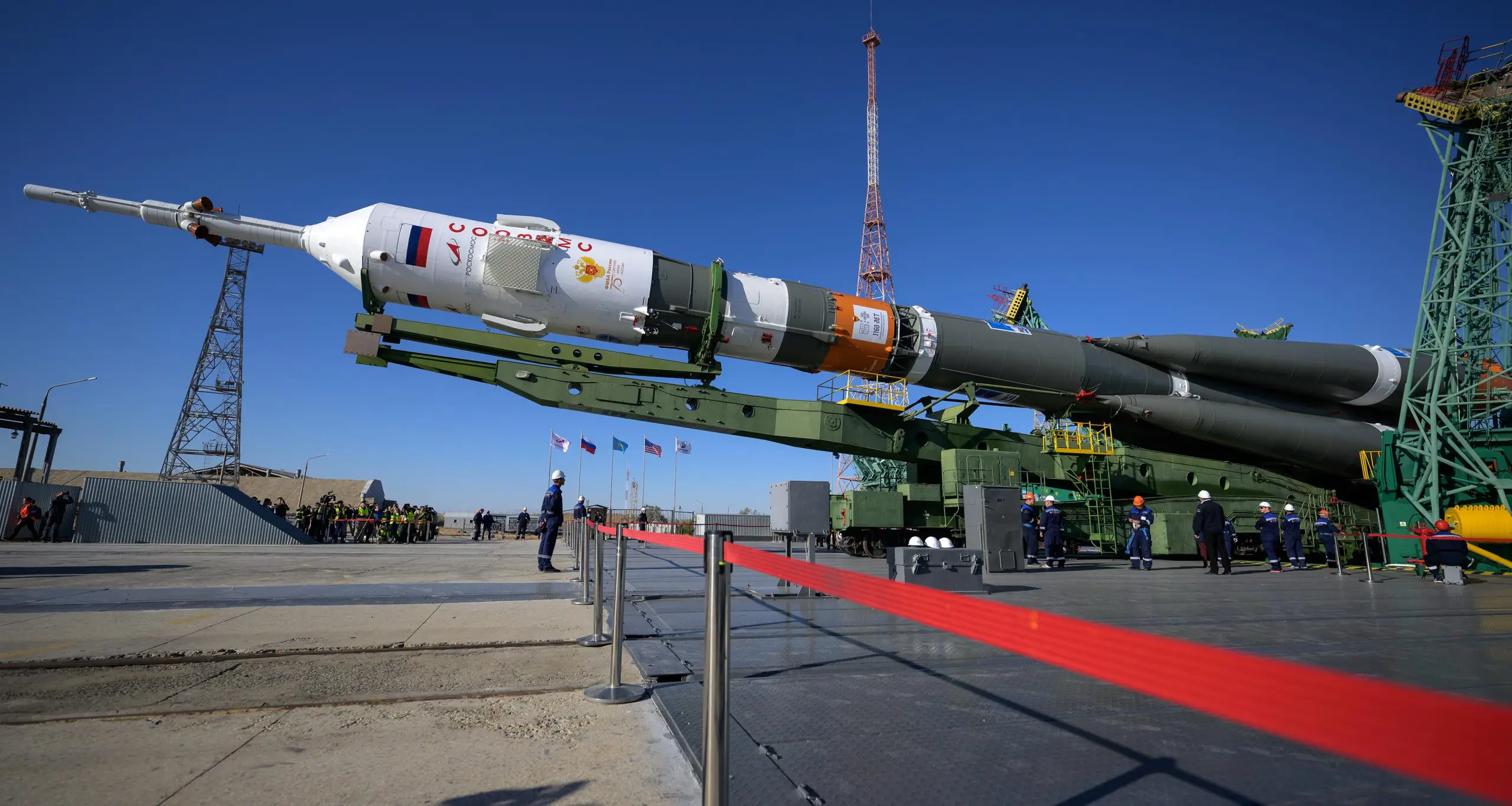
GRECHKO - Yes, Korolev knew how to make a good team of right minded individuals and how to keep them working together. He would install in them a feeling of romanticism about rocketry and a desire to work hard. Sometimes he would have someone wake him up before dawn to go out and watch the rocket being moved to the launch pad in the morning dawn. He was a romantic and had strong feelings about rocketry. It is my opinion that we should not become only consumers and loose our pioneering spirit.
By Dennis Newkirk and Jim Plaxco
This article originally appeared in the May 1993 issue of Spacewatch.
What follows is part one of an interview with cosmonaut Dr. Georgi Mikhailovich Grechko made on April 7, 1993 by Dennis Newkirk(DN);, author of the Almanac of Soviet Manned Space Flight, and Jim Plaxco(JP);. Dr. Grechko was gracious enough to skip lunch to answer our questions in between his CSSS sponsored appearances here in the Chicago area.
While here, approximately 1,600 people heard Dr. Grechko speak about his experiences in the Soviet space program. The audiences ranged in size from the 12 students and teachers of the Harper College Honors Astronomy class to a packed 550 seat auditorium at Schaumburg High School.
Dr. Grechko's english is self described as broken English (the international language of scientists); and this flavor has been retained somewhat in this transcription. In addition, some of the more interesting questions and answers from his recent lectures have been appended to this interview.
Dr. Grechko graduated form the Leningrad Institute of Mechanics in 1955. In April 1964, he was among 13 men selected from the Korolev Design Bureau for cosmonaut group. Dr. Grechkp received a Master of Technical Science in 1967. Based on his work in Korolev Design Bureau on lunar probes, he was assigned to train for the Zond circumlunar mission. After cancellation of the circumlunar mission in 1968, all Zond trainees were transferred to the lunar landing mission. After cancellation of the lunar landing missions, all cosmonauts were transferred to either the ASTP, Salyut, or Almaz programs. Grechko was on backup crews for Soyuz 9, 12, and T-11. He flew on the Soyuz 17/Salyut 4, Soyuz 26/Salyut 6, and Soyuz T-14/Salyut 7 missions for a total of 133 days in space. Grechko then became the head of a laboratory at the Soviet Academy of Sciences specializing in high altitude atmospheric physics.
JP - What was your position for your first flight?
GRECHKO - Flight Engineer. I had scientific tests, I spend all my time, sometimes in the morning I knew I had a very interesting scientific program and decided not to eat all the day, and in the morning I would get a chocolate from the food stores so as to not spend time eating, but in the end of the day I would find the chocolate still in my pocket. Because there are too many new prospects in space, so much is interesting that I don't like eating or sleeping. I like experiments and my duty was engineering, exploring all devices of the station, but my hobby was science, and I was most successful with scientific experiments on board Salyut 6 and the scientific program of our mission to Salyut 7 was made by me and my friends. I was one of the authors of the program. And it means I was engineer, became Flight Engineer and became scientist on board a space station, and then I founded my laboratory to study atmosphere from space. I was the head of this laboratory processing data we obtained from space.
JP - Was the data you obtained on the atmosphere from space very valuable to your studies?
GRECHKO - I made many experiments about the Earth's surface, ocean surface, medical, biological, and I had many results, but the most successful were my studies of the atmosphere. Then after my first flight I understood and I thought about the efficiency of our space station and with Segdayev he understood that the efficiency of our station was very low and your NASA insists on the same low efficiency of your Freedom station and my thought was, what can I do to have designed to get more scientific results from a flight. First I tried to write that the idea of our station was wrong, the more modules our chiefs thought, and they still think now, the more scientific modules the better but it's wrong. The more scientific modules make the efficiency of the station lower experiments will interfere with each other, require different orientations, are sensitive to human movements, etc., diminishing the time each experiment can be active. When I express it for the first time to Glushko and his deputy, Semenov, they punished me, they stripped me into pieces, they ignored me for many years after this. I expressed this idea in 1978 for the first time, that a manned space station is a bad idea. They are getting awards for this kind of space station and even the first cosmonaut on board said that its a bad idea. But all new ideas have three steps, first 'its impossible', next step is 'maybe', and next is 'its obvious'. A free-flyer design is best for efficiency.
JP - How do you define space station efficiency?
GRECHKO - When I understood my new idea had no support, just like new idea of Feoktistov for single stage vertical takeoff and landing project he had no support also. I asked myself what else I could be and I understood that we had good enough cosmonauts to make experiments, I was maybe number 1, 2, or 3, or maybe 3rd best or 5th best in scientific experiments but number 1 for me was Dzhanibekov not only because he flew 5 times in space but because he was very efficient and modest, very active in space. He was number one for me, maybe I was number 3 or 5, I don't know, but I understood that we had good enough cosmonauts but our data sometimes was not processed. I understood that now the main task was not to have data from space but to process data from space and I understood that for me it was one way to make our space station more efficient from a scientific point of view and founded a new laboratory to process all data that I had from space, but not astrophysics, biological, medical, geophysics, I choose my atmosphere data.
JP - What would your advice be to NASA about the space station Freedom program.
GRECHKO - I told them 2 or 3 years ago my opinion about free flyers they rejected and didn't appreciate my idea because it was too new for them, because they are bureaucrats, because they had their money for Freedom and nobody would speak up. It was my duty to say to America that you have the wrong idea. Two or 3 years ago when they discussed a redesign to make Freedom a little smaller or bigger and I told them it is not a thing for discussion, to make it bigger or smaller, you should think about new ideas and one example of a new idea is a free flyer, but maybe you will have a new much better idea that my idea of a free flyer but stop this monkey business to repeat our mistake with many scientific modules on the same platform, but they were blind.
JP - One of the arguments for having people on space stations for a long period of time is that it helps us learn a lot about trips to Mars. How do you react to the assertion that Mir was a stepping stone to manned mission to Mars?
GRECHKO - Mir was really a step to Mars because before flight to Mars, we should fly for about one year about the Earth. Of course it is true.
DN - Perhaps it is best to make a station with scientific modules that can dock periodically for servicing by a crew?
GRECHKO - When they began to make plans for Mir station it was crazy that after docking they throw away the engine module and I told them its crazy, you should use this modules like free flyers with engines and shouldn't discard the engines after docking like Kvant 1. First of all you should use this module in fully automatic mode 24 hours a day for one or two months and only then you should dock the module and discard the engines. You know it is said that in your own country you can not be one who looks ahead for your own country. The US has the same problem.
JP - How are things now in the Russian space program?
GRECHKO - Space activity was the great advertisement of the USSR, but now the government is bankrupt. We have some money, but not enough. We will cancel the most expensive programs, we will use our unmanned satellites and Mir and we will lease the station to astronauts of other countries and we will use our boosters to launch foreign satellites and we will cooperate with other countries. You know you have a space shuttle, we have a shuttle and maybe soon a smaller shuttle, Germany has Sanger, France Hermes, Great Britain Hotol, it is crazy to have 6 shuttles. We should cooperate and use your shuttle, our boosters, and so on. The best from all countries. But of course you will have trouble from your space industry, they have a very good lobby in your congress, because when I was in the Headquarters of NASA in Washington a few years ago and I said your station was too big and the idea was too old. They didn't appreciate my speech. After all, they were big bosses and had their money, but now when I was in Ames more recently and I tell them the same thing they appreciate it.
Some audience questions from one of Dr. Grechko's public appearances here.
Q - Were you ever scared during your flights?
GRECHKO - In two different ways, one is during reentry when I could see out the port hole the heat shield burning away getting thinner and thinner. I knew that it would be okay, but the shield is about 20 cm from my head and it was scary to see even thought I know it will be all right. Another time the parachute did not come out when it should and I thought what to do .... I decided to study the instruments and at least tell mission control what was happening, and then it opened. But really, in a good way, I was at first scared I might not be able to perform my mission and would fail in some way, but after I see that I can do it, it was all right.
Q - How long did it take for you to recover from your 96 day flight?
GRECHKO - About 2 weeks to be able to function relatively normally, but it was about 3 months before the doctors judged me to be fully recovered. Not okay for flight but okay for normal activities.
Q - Have you proven that flight to Mars or a permanent space station is okay?
GRECHKO - A colony in space I don't know, but colony on moon or Mars is probably okay for good health. Of course I guess, because no one can answer your question now.
Q - Were there any women involved in the space program?
GRECHKO - Tereshkova was the first in space but this was a political decision to launch a woman. In that day, we should be number one in everything, the first satellite, first man in space, first woman in space and we joked at the time we should have the first child in space. It was the great years of space race between our countries. But then we heard the Americans plan to have the first space walk for American woman, immediately we launched our Savitskya and she made the first space walk for a woman. My point of view is that of course we should use women in space because there are some professions in which women are much better than men and in this case we should have women. If we need this profession in space and it is a profession in which women are better lets go with them if not then no. There was a joke in our space team when we invited a French cosmonaut to fly on board our space station, the first response was that they would launch a French woman with us in space and we had a meeting and joked and asked each other who will fly in space with a French woman, and I said that I would not and they joked about me that I am afraid of French woman, but I said no, I'm not afraid but I had two good flights with very good results but I told them to fly with a French woman and to make something more beyond the flight program we would be punished, and if not then we will be punished more. But its just a joke. Seriously I hear this year they will launch another woman in space. She is the wife of our chief of mission control Ryumin and we jokingly asked him why he wants to launch his wife into space! She may fly in December 1993 on 18 month mission
JP - What was the atmosphere like working in the Korolev bureau before Sputnik.
GRECHKO - I was happy working in the bureau because I knew when I graduated there was no satellite and I could not choose any bureau working on satellites, so I choose the one working on the biggest rockets. Because in some years I knew that a space booster would be built. When I entered the bureau, my first duty was the SS-6 ICBM, and thank God it was never used for what it was designed. First of all, I calculated trajectories from Tyuratam to Kamchatka and understand deviation from target points. It was my duty to calculate the trajectory from the Cosmodrome, but it was not Cosmodrome at that time, it was "polygon" - the place to test rockets not to go to space. For me this was my happiest time, when I was a young engineer and I worked at the "polygon" to test the R-7 and test it for booster for the first satellites.
My most happy years were not my years in space but when I was in Korolev KB and at the "polygon". Why? because Korolev extended the spirit of pioneers. He supported all new ideas immediately, he didn't play dirty political games with rockets and satellites. He was very honest and direct. He did not try to hide or deceive, he was always straight forward and open. It was after some years it was very hard to ask a Chief Designer for an audience, but to ask Korolev even as a young engineer, I could ask Korolev and he invited me some days to see him. His power was in his team. He could choose his team, sometimes crazy and unpleasant people, but he did this with only one goal to go ahead and ahead with the design satellites, spacecraft and rockets. The spirit of pioneers and clean atmosphere of design bureau without rumors and playing and hiding something behind his back. We could make many things out of metal without many, many papers. Now if you make little devices you must make a vast quantity of papers before you can go ahead. Sputnik 2 was made in a month. I bet nobody now can make a new satellite in one month. We had experienced design bureau, but I bet no one bureau will make a satellite in one month, but we did it, because after the launching of the first satellite, and I know about it from his own mouth that he was invited to Khruschev at the Kremlin. Khruschev said "please do something launch something new for the anniversary of the revolution," but it was after Oct. 4 and the anniversary was Nov. 7. Less than one month and we launched a new satellite with a dog. This was for me the most important, very active, not very much documentation or signatures, signatures, signatures, signatures to avoid punishment if something went wrong. Nobody said "there existed an opinion", we would say our own opinions and Korolev would decide which was right and approve. I was happy in this clear pioneering spirit of that time.
JP - After your time as an engineer you became a cosmonaut with the lunar training group. What was it like, that seems like it would be quite a different life to make that change.
GRECHKO - I liked science fiction, and I had experience to be in the occupation by German troops in the Ukraine for 2 years in Chernigov without my parents, and my toys were rifles, guns and grenades. It was the toys of boys in war time. And many of my friends were dead by these toys, or wounded. I had only one. Once I had an explosion of one cartridge in my arm. You can see this displays slight scar on inside of thumb into the palm. But I was lucky, I was alive. And my character was I liked to drive motorcycles, fly gliders, small one engine airplanes, parachuting, down hill skiing, scuba diving, snorkeling, I was made for space Grechko drove in a vintage auto race in the US a few years ago with a team driving a 1973 Astin Martin and placed 3rd. I liked to be on first frontier. When we began design of spacecraft for 3 cosmonauts, Korolev said that one of the 3 should be flight engineers, and from whom would he choose flight engineers, of course from us young engineers in space technology. He knew us, and he invited us to be flight engineers because only we had experience in space engineering. I gather 2-300 of us were invited by Korolev for medical tests, but in those times medical tests were very hard, sometimes cruel, and only 13 of us got okay from physicians for flight engineer.
JP - What were your responsibilities as the flight engineer?
GRECHKO - I was to explore all devices in the spacecraft and station. It was my primary task. Because when Gagarin flew, his spacecraft was fully automatic, really he was the subject to test not the object. Gagarin was chosen as a very healthy man and good looking man and good in communication, but not like specialist, not like engineer, or doctor or academician. The next move in space was for specialist, and Korolev said one should be the same as Gagarin but the next should be engineer and next should be a scientist.
JP - The Commander would be the one to control the spacecraft?
GRECHKO - Really, all that he can do, the Flight Engineer can do, but a pilot can't do everything a flight engineer can do. Its really two departments, Ministry of Defense and Ministry of General Machine Building and they share their duty and their cosmonauts and it was fighting between them as to whose cosmonauts should fly. The Ministry of Defense and their people would say "you guys you are engineers, you duty is to design spacecraft and we are pilots, we should fly, not you" but Korolev was of course right because space is for specialists and professionals.
DN - I want to ask you about the Academy of Sciences in the 1960's and how much power it had to approve projects like N1/L3, and about President Keldysh.
GRECHKO - He was the figure number one or two compared to Korolev. He was very powerful man. He did very much for us. He had his own Institute of Applied Mathematics and we were very close with his institute. I calculated trajectories in Korolev's bureau and in his institute they calculated too and we compared. His influence was very good. It was their idea to launch rockets to the moon not from the Earth but from orbit. I had many colleges and friends in this institute. I was one of the last to speak to Keldysh, he was very interested in this and I spoke with him and he made many notes. I told him that the idea of keeping all instruments on the same station platform was not good, but he died. He had previously undergone heart surgery by a famous American surgeon.
DN - Was it his personal authority that had influence on projects, and not Academy of Sciences authority?
GRECHKO - His institute checked our ideas, and made methods of how to calculate our trajectories. They made mathematical investigations and I used their methods to calculate trajectories. It was not like Einstein, working all by himself, it was his institute and his people, now many of them are famous, it is a very good institute.
DN - When Korolev was trying to get funding for N1 or moon projects, who did he have to convince in the government?
GRECHKO - In cooperation with the Minister of General Machine Building and Minister of Defense, they make proposals to Politburo and Khruschev. Sometimes to Prime Minister, but he was not very powerful, most powerful was Politburo and Central Committee of CPSU. They have Department for Defense and in the department they have small department for space.
DN - What about the Council of Chief Designers?
GRECHKO - The Politburo and Central Committee, they never made any decision, even for one ruble, they never make bad decision themselves. They ask designers, academicians, and all. When maybe a hundred who can be blamed if they are wrong sign the document, will Politburo and Central Committee approve something. It was their politics and they never voiced their opinions. It was very funny that a man from the Central Committee, say a chief of a department or the Minister of Defense (there were wise chiefs and small chiefs);, nobody ever heard one of them say, "I have my opinion on this question," they instead say "There exists an opinion" but who's opinion you never know. It was very good to be in the Central Committee because you could say do this and that and never be blamed because nobody knew who's solution it was. Soviet industry was much more dirty players in business deals than your business. With one hand behind the back they would deceive and mislead, not at all like western business.
DN - The Korolev bureau seems to have split into pieces?
GRECHKO - Not really, we founded branches and first they were branches, then they became their own bureaus.
DN - Like Koslov, Photon, and Kosberg perhaps?
GRECHKO - Kosberg was not our branch, because Kosberg was a designer of engines and we asked him to make for us engines for some of our stages. I gather Kosberg was not founded by us.
DN - Was it founded by Glushko?
GRECHKO - No, it was a rival to Glushko. There was the big quarrel between Glushko and Korolev about the fuel for N-1, we would use Kerosene, Glushko wanted hypergolics, and because they didn't have any agreement, Glushko rejected to make engines for Korolev, and then Korolev asked Kosberg and Kuznetsov. But they were newcomers to big engines and it was very bad because engines from Glushko would have been much better in my opinion.
DN - What ended the N1/L3 project?
GRECHKO - The lunar program was ended because the lander was technologically inferior to the Apollo and the risk and expected or probable loss of life was too high to continue the project in the light of the highly successful Apollo landings. The N-1 was capable of being made reliable but without a reliable lander there could be no mission. This is why it was canceled.
DN - Did you ever work for Babakin KB?
GRECHKO - No, when we made Luna 9 and 16, and maybe another, I invented very new software to calculate the velocity of impact and reduce the velocity for landing. Then lunar landing program was transferred to Lavichkin and I gave them my software and they used it first when they made vertical landings, but then they made non-vertical landings they improved my software and their gratitude was very strange because when I had my masters degree I asked them to comment on my software and he mailed me their opinion that their software was much better than mine, but they used mine, improved it for some years. Of course their software was at this time better but they used mine and modernized it and I gave it to them without copyright or money and I spent many times adjusting my software to their computer.
DN - How does the Salyut KB and the Energia NPO Space Station Design Office work together?
GRECHKO - The shell of the Almaz was used, and the control devices from Soyuz, were joined to make the Salyut. The Salyut hull was made by a branch of Chelomie KB, and the life support and control devices from the Soyuz were made by the Kaliningrad KB . I really don't know what is Salyut KB, maybe Salyut KB was this branch of Chelomei. I remember when we were at the Chelomei division it was divided into pieces and we had to change our passes when we went from one to another. Maybe one part of Chelomie was for rockets and another was for spacecraft, but maybe not.
DN - Do you know about the Spiral project which began in 1962 and flew in 1976?
GRECHKO - It was very good project, but it was one more mistake of our government. They said Americans didn't have a space shuttle and we shouldn't have too and it was destroyed. And then after you made your space shuttle, immediately they demanded a space shuttle. It was very crazy of our government.
DN - Can you tell me about Feoktistov's VTOL shuttle design?
GRECHKO - About 15 years ago, Feoktistov proposed a vertical take off and landing shuttle, but when he brought up the matter with Semenov his idea was not received well and he left Energia NPO after that. Feoktistov was brilliant but very temperamental when he knew he was right.
DN - You have written that sometimes at the Cosmodrome, Korolev would pick up his engineers at the safety fence around the launch pad and take them beyond the gates, in his car, to watch the launch with him?
GRECHKO - Yes, Korolev knew how to make a good team of right minded individuals and how to keep them working together. He would install in them a feeling of romanticism about rocketry and a desire to work hard. Sometimes he would have someone wake him up before dawn to go out and watch the rocket being moved to the launch pad in the morning dawn. He was a romantic and had strong feelings about rocketry. It is my opinion that we should not become only consumers and loose our pioneering spirit.